
Occupational Health and Safety (OHS)
Occupational Health and Safety Vocational School
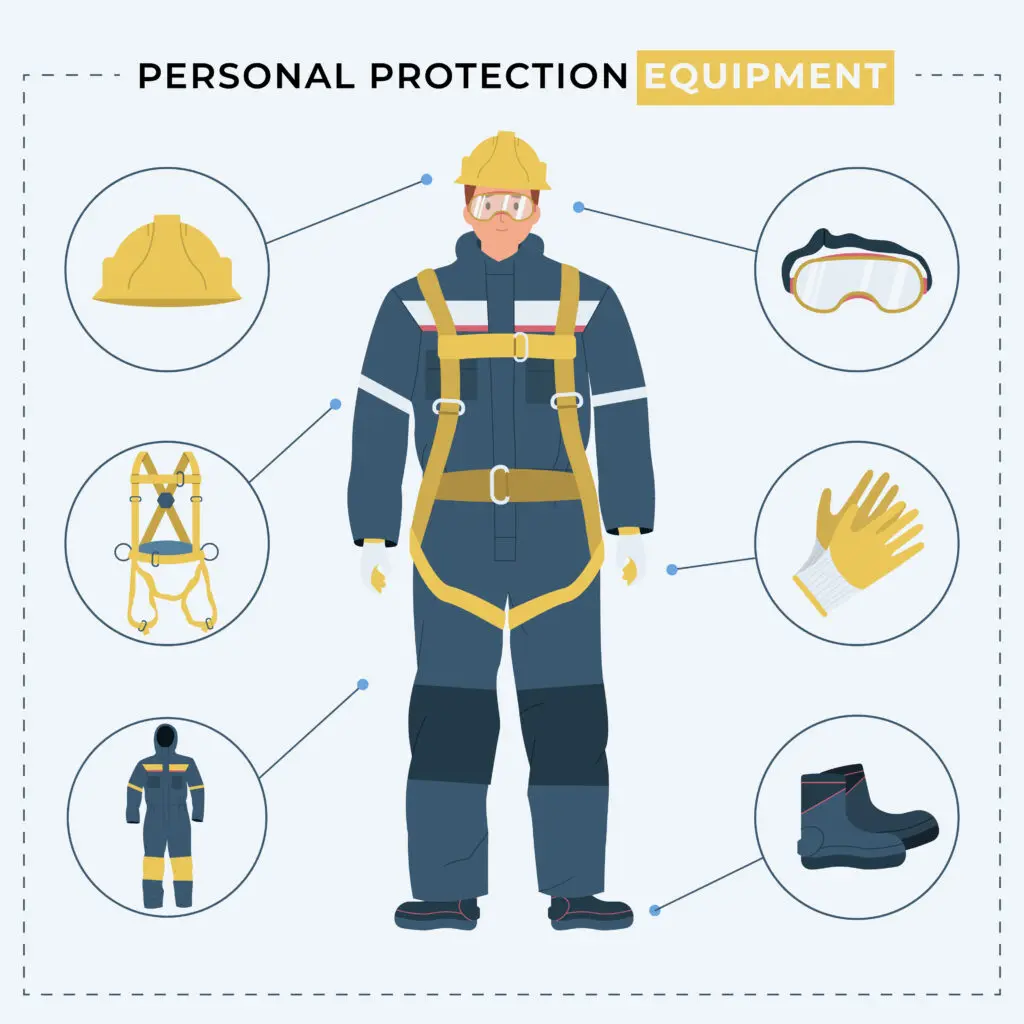
PPE stands for Personal Protective Equipment, which refers to equipment used to protect individuals from hazards in the workplace, such as work accidents or exposure to harmful substances. Common PPE includes head protection (helmets), eye and face protection (goggles/face shields), ear protection (earplugs/earmuffs), respiratory protection (respirators/masks), hand protection (gloves), and foot protection (safety shoes). The use of PPE is essential to ensure worker safety.
Functions and Types of PPE:
Head Protection:
Protects the head from impact, falling objects, or chemical exposure. Examples: helmets, caps, hair protectors.Eye and Face Protection:
Protects the eyes and face from exposure to chemicals, gas, particles, or splashes. Examples: safety goggles and face shields.Hearing Protection:
Protects the ears from high noise levels that may damage hearing. Examples: earplugs and earmuffs.Respiratory Protection:
Protects the respiratory system from dust, smoke, hazardous gases, and microorganisms. Examples: masks, respirators, and breathing apparatus.Hand Protection:
Protects the hands from chemicals, burns, or other hazards. Materials vary depending on the need, such as rubber, leather, or metal.Foot Protection:
Protects the feet from falling objects, sharp items, and chemical spills. Example: safety shoes.Protective Clothing:
Protects the body from chemicals, fire, or other physical hazards.Personal Fall Protection Equipment:
Used to prevent injuries from falls when working at heights.
The Occupational Health and Safety Management System Manual of the Vocational School of Diponegoro University (SMK3 SV UNDIP) is a concrete effort created to fulfill Occupational Health and Safety (OHS) standard requirements in accordance with Government Regulation No. 50 of 2012 concerning the Occupational Health and Safety Management System.
The SMK3 SV UNDIP Manual is designed to serve as a guideline for the entire academic community to ensure Occupational Health and Safety during academic and non-academic activities.
This document is expected to serve as the main reference in implementing the SMK3 within the SV UNDIP campus environment and functions to control and/or eliminate existing potential hazards.
In general, the SMK3 SV UNDIP Manual contains:
Profile of the Vocational School of Diponegoro University
Policy establishment
OHS planning
SMK3 implementation
OHS inspection
Management review
Appendices containing Procedures and Work Instructions
The Vocational School of Diponegoro University (SV UNDIP) is committed to implementing the Occupational Health and Safety Management System (SMK3) within the campus environment and is responsible for continuously reviewing and improving the quality of its management system. As a manifestation of this commitment, SV UNDIP has established the Occupational Safety and Health Advisory Committee (P2K3) of SV UNDIP with the following structure:
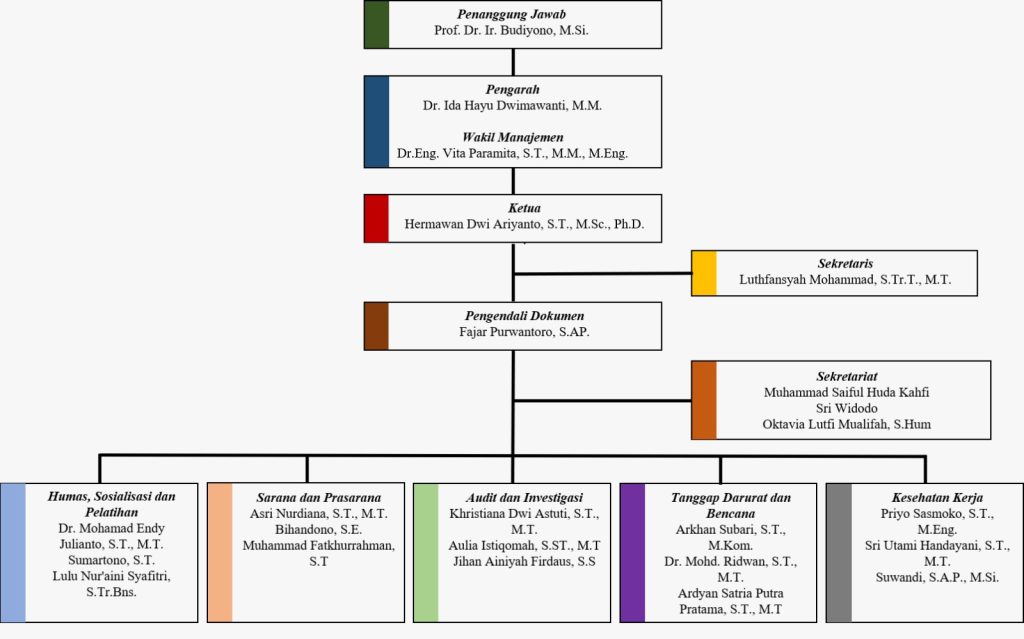
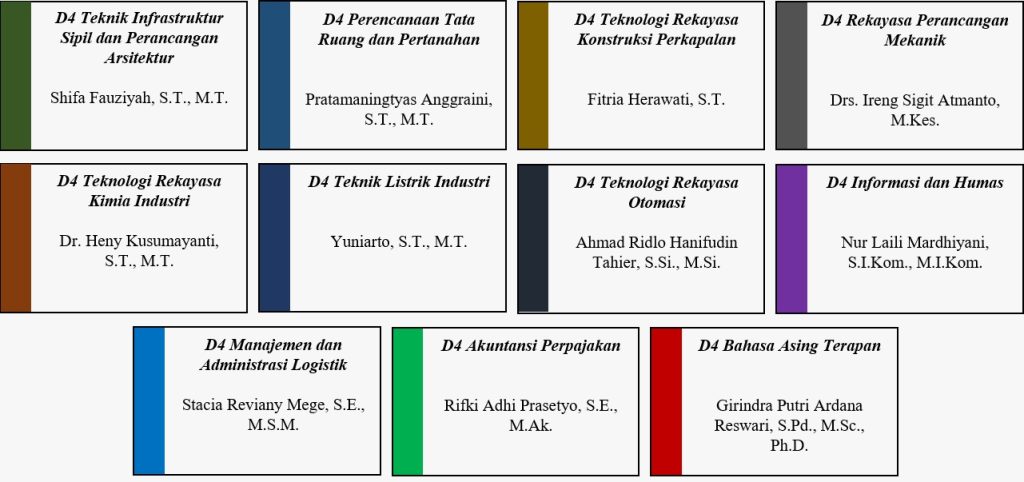
The P2K3 of SV UNDIP has the following roles and responsibilities:
The Rector serves as the person responsible for the implementation of the Occupational Health and Safety Management System at the Vocational School of Diponegoro University.
The Chair of the Occupational Safety and Health Advisory Committee (P2K3), held by the Vice Rector for SDMO & TSI, acts as the leader of routine meetings for implementing Occupational Health and Safety Management System programs.
The Vice Chairs of the Occupational Safety and Health Advisory Committee (P2K3), consisting of Faculty Deans, School Deans, Heads of KPM, Heads of KAI, the Institute Secretary, Directors, Bureau Heads, Library Heads, and OHS experts, act as assistants in carrying out the Chair’s duties.
The Secretary of the Occupational Safety and Health Advisory Committee (P2K3), the Head of the OHS Subdivision of the Vocational School of Diponegoro University, is responsible for preparing meeting invitations, recording minutes, and preparing OHS Audit reports.
Members of the Occupational Safety and Health Advisory Committee (P2K3), including the OHS Task Force (SATGAS) of each unit, are responsible for implementing the established programs related to OHS and environmental safety.