By: Prof. Dr. Ir. Budiyono, MSi – Dekan Sekolah Vokasi Universitas Diponegoro
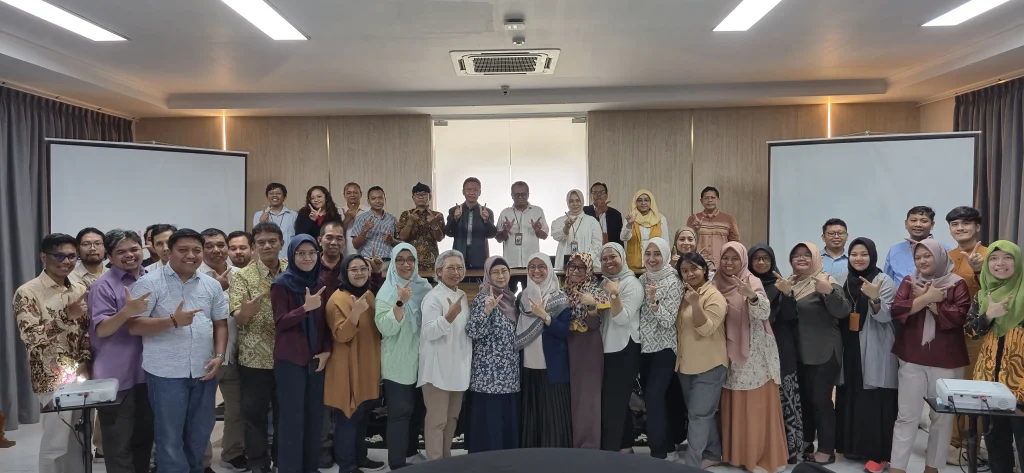
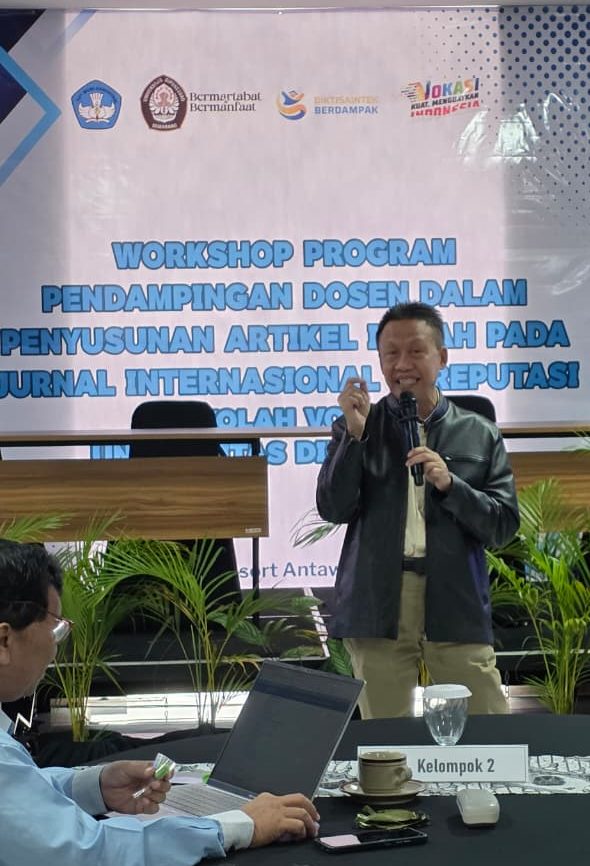
Jepara, December 3, 2025. From 1–3 December 2025, the Vocational School of Diponegoro University, organized an International Publication Writing Workshop as part of its commitment to strengthen academic culture and enhance the quality of research outputs across the institution. The workshop engaged experienced speakers and facilitators, and was attended by lecturers from all study programs.
The workshop was not merely a technical training on writing scientific articles. It served as a strategic attempt to cultivate a more productive, collaborative, and impact‑oriented academic culture. In the current global era, scientific contribution is an important determinant of academic reputation, and international publication has become one of the most relevant pathways to build that reputation.
- Publication as an Institutional Commitment, Not an Individual Burden
International publication is no longer an optional individual activity. It has become an institutional commitment that reflects the progress of a university. Beginning in 2026, the School of Vocational Studies will develop measurable publication targets at the level of study programs, research clusters, and lecturer–student collaboration. These targets are not meant to increase administrative burden, but to ensure that academic energy is directed toward meaningful scholarly productivity. It is time to shift the mindset from fulfilling administrative requirements to producing knowledge that benefits society, industry, and the world.
- Collaboration as the Foundation of Research Strength
The workshop reaffirmed that strong research does not emerge from isolated individuals, but from collaboration. Quality research is created through the meeting of diverse perspectives and competencies. The School of Vocational Studies has a unique academic structure—engineering, business, language, and information technology—that has strong potential for interdisciplinary research. Cross‑program synergy is not merely a possibility, it is a strategic necessity for producing competitive publications.
- Focus on Solutions, Not Just Theoretical Review
As a vocational institution, Diponegoro University has a distinctive advantage: the ability to generate knowledge grounded in real‑world problem solving. Therefore, our research has strong potential to contribute to industrial solutions, technological innovation, business models, community empowerment, and knowledge transfer. Ideal research does not only answer abstract academic questions, but offers concrete, measurable, and tested solutions—even with the potential to become teaching factories, startups, or appropriate technologies.
- Building a Strong Supporting Ecosystem
The workshop highlighted that international publication will not flourish without systemic institutional support. Several initiatives prepared for 2026 include: international publication grants, proofreading and writing clinics, APC support, facilitation of international collaboration, and the integration of research with teaching factories and the AI‑TEC ecosystem. With this support, publication becomes an outcome of a healthy academic ecosystem, not a solitary struggle.
- The Workshop as a Starting Point, Not an Ending Point
The workshop is expected to become a new momentum, not a one‑off activity. Three days of learning will become meaningless without follow‑up actions such as writing, completing manuscripts, forming research groups, determining target journals, and consistently finishing publication processes. Knowledge grows not from extensive planning, but from consistent execution. Building a culture of publication means building a culture of movement.
Reaffirming the Global Role of the School of Vocational Studies
Since 2016, the School of Vocational Studies has undergone two important phases: institutional consolidation and capacity strengthening. In 2026, we enter a new phase: the World‑Class Vocational School Era. In this phase, international publication becomes a key driver because publication is not just numbers—but reputation, influence, networks, and contribution to humanity.
Closing: Writing as a Contribution to Humanity
This workshop reminds us that academic work is not merely an academic process, but an act of sharing goodness through knowledge. Writing and disseminating research is not a bureaucratic formality, but a moral responsibility—towards society, the nation, and humanity.