
Notes from Capacity Building February 2-3, 2026
By: Capacity Building Team
During an internal capacity building session, the Dean of the Vocational School at Universitas Diponegoro invited lecturers and administrative staff to reflect on their roles—not merely as routine campus workers, but as key contributors to an ecosystem that prepares Indonesia’s future professionals.
He emphasized that the challenges of vocational education today can no longer be addressed by curriculum and facilities alone. What truly shapes students’ experiences is the daily work culture: how lecturers interact with students, how staff provide services, and how every unit works together as one team.
In a relaxed yet reflective atmosphere, the Dean introduced five simple cultures that can be practiced immediately—without waiting for new policies, additional budgets, or complicated procedures. These five habits, he believes, can significantly transform the way students experience their education at the Vocational School.
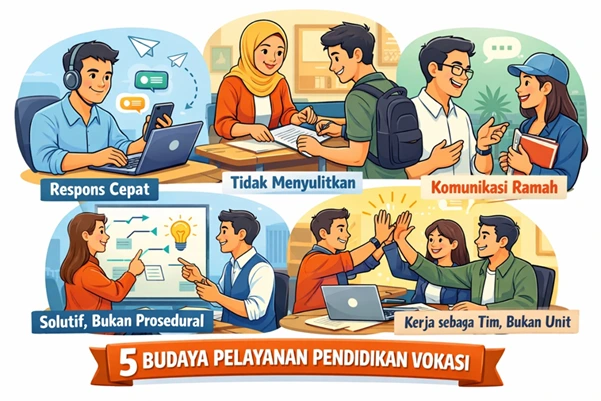
- Quick Response
Students often do not expect instant solutions. What they truly need is to feel heard and acknowledged. A simple reply within 24 hours—even just to say “we are checking on it”—can provide reassurance.
“Students do not demand immediate solutions; they just want to feel that someone cares.”
- Do Not Complicate Things
Students often have to return multiple times because requirements are given step by step. The Dean encouraged everyone to share complete information from the beginning and help students resolve their matters in a single visit.
“If it can be made easier, why make it difficult?”
- Friendly Communication
Tone of voice, facial expressions, and willingness to listen are often remembered longer than the conversation itself. A smile, a greeting, and attentive listening are essential parts of educational service quality.
“Students often remember how we speak more than what we say.”
- Be Solution-Oriented, Not Merely Procedural
Explaining regulations is important, but stopping at “according to the rules, it cannot be done” should not be the end of service. There is always an alternative or at least a clear direction students can follow.
“Students come with problems; they should not leave with confusion.”
- Work as a Team, Not as Separate Units
For students, there is no academic office, finance office, or student affairs office. They only know the Vocational School as one entity. Therefore, cross-unit collaboration and mutual support are essential for a positive service experience.
“For students, we are one Vocational School—not many separate rooms.”
Closing: Changes That Can Start Today
The Dean concluded that these five cultures require no meetings, no formal decrees, and no additional funding. What they require is awareness and willingness to improve daily habits.
Small changes in responsiveness, communication, and service mindset can have a profound impact on students’ confidence as they enter the professional world.
“One day, our alumni will say: I am who I am today because the lecturers and staff at the Vocational School of Undip were exceptional.”
*This illustration depicts five simple cultures that are the key to improving the quality of service at the Diponegoro University Vocational School: fast response, no hassle, friendly communication, non-procedural solutions, and working as a team. These values do not require new policies but simply start from small changes in the daily attitudes and ways of working by lecturers and education staff in order to provide the best learning experience for students.