
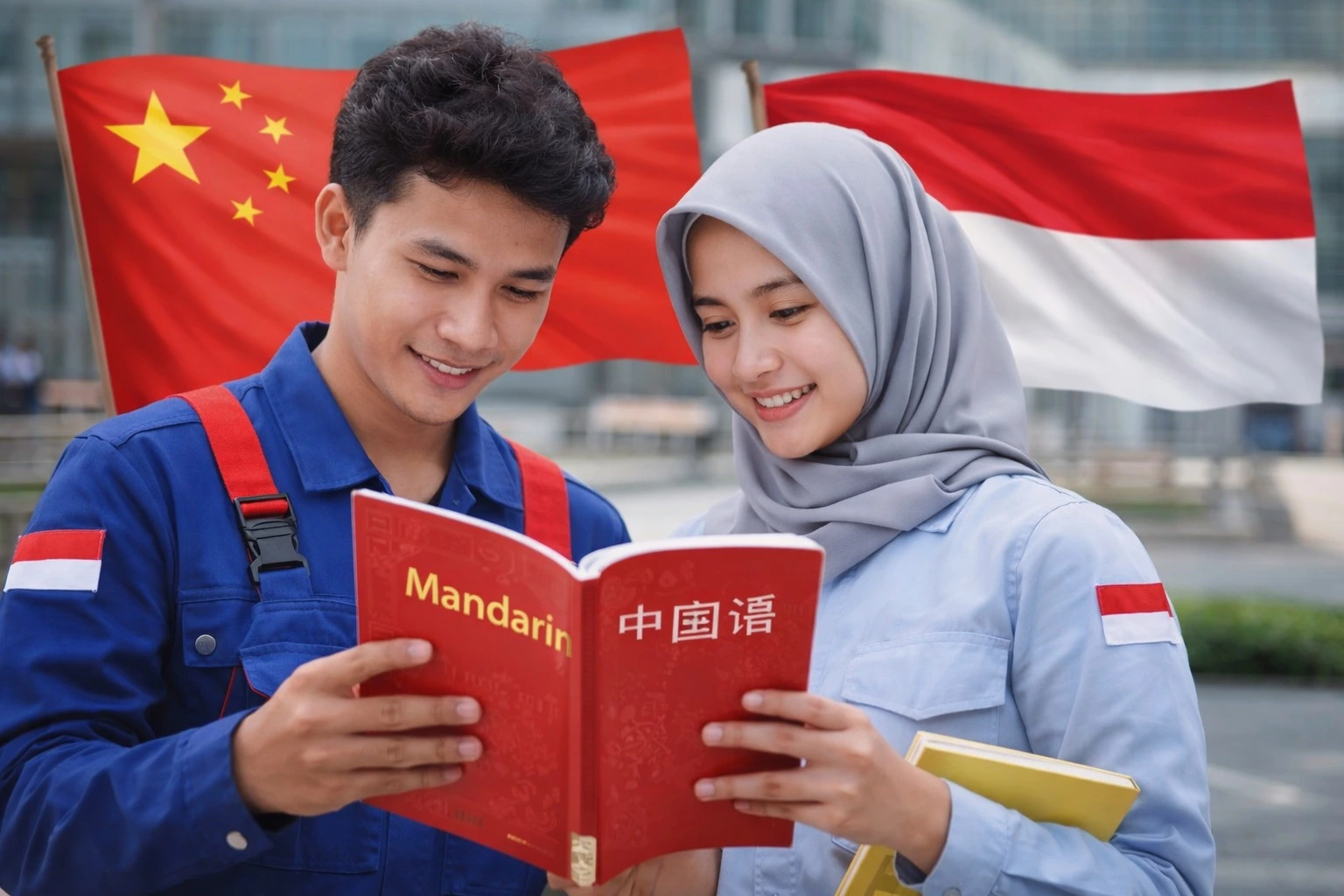
Language skills are no longer complementary—they are becoming core vocational competencies.
By: Prof. Dr. Ir. Budiyono, M.Si. – Dean of Vocational School, Diponegoro University

Semarang, Indonesia | January 26, 2026. Vocational education has long been associated with technical mastery and hands-on skills. However, in today’s increasingly interconnected global economy, technical competence alone is no longer sufficient. For vocational graduates seeking to compete in international industries, proficiency in Mandarin has emerged as a strategic advantage that can no longer be ignored.
China’s growing role in global manufacturing, logistics, maritime industries, technology, and infrastructure development has reshaped workforce demands worldwide. In Southeast Asia, including Indonesia, Chinese enterprises and joint ventures are expanding rapidly, creating new employment opportunities—particularly for vocational graduates. Yet many of these opportunities remain underutilized due to limited foreign language proficiency.
From an industry perspective, communication barriers often become operational barriers. In factories, shipyards, logistics hubs, and project-based environments, daily coordination frequently involves Mandarin-speaking supervisors, engineers, or business partners. Vocational graduates who possess Mandarin skills are therefore not only more employable, but also more adaptable in multicultural workplaces.
Several vocational institutions across Asia have begun integrating Mandarin as part of their applied curriculum, recognizing that language competence directly enhances workplace efficiency and safety. This approach reflects a broader understanding that language is not merely an academic subject, but a functional tool in professional practice.
Critics may argue that vocational students should focus primarily on technical skills rather than foreign languages. While this concern is understandable, it overlooks the reality that technical skills operate within social and organizational contexts. Without effective communication, even the most advanced technical expertise may fail to deliver optimal outcomes.
In fact, Mandarin proficiency does not replace technical competence—it amplifies it. Graduates who can communicate across linguistic boundaries are better positioned to assume supervisory roles, participate in international projects, and engage in cross-border collaboration.
Beyond employability, language skills also shape professional confidence and global awareness. Exposure to Mandarin encourages students to understand different work cultures, business ethics, and communication styles. This cultural literacy is increasingly valued by employers seeking globally minded yet practice-oriented professionals.
For vocational education institutions, integrating Mandarin into the curriculum represents a forward-looking investment. It aligns skills training with global labor market realities while expanding graduates’ career horizons beyond domestic boundaries.
In conclusion, Mandarin proficiency should be viewed as a strategic vocational skill, not an optional add-on. As global industries continue to evolve, vocational graduates equipped with both technical expertise and language competence will be better prepared to navigate complex international environments and contribute meaningfully to economic development.
If vocational education aims to remain relevant in a globalized world, language—particularly Mandarin—must become part of its core competency framework.