
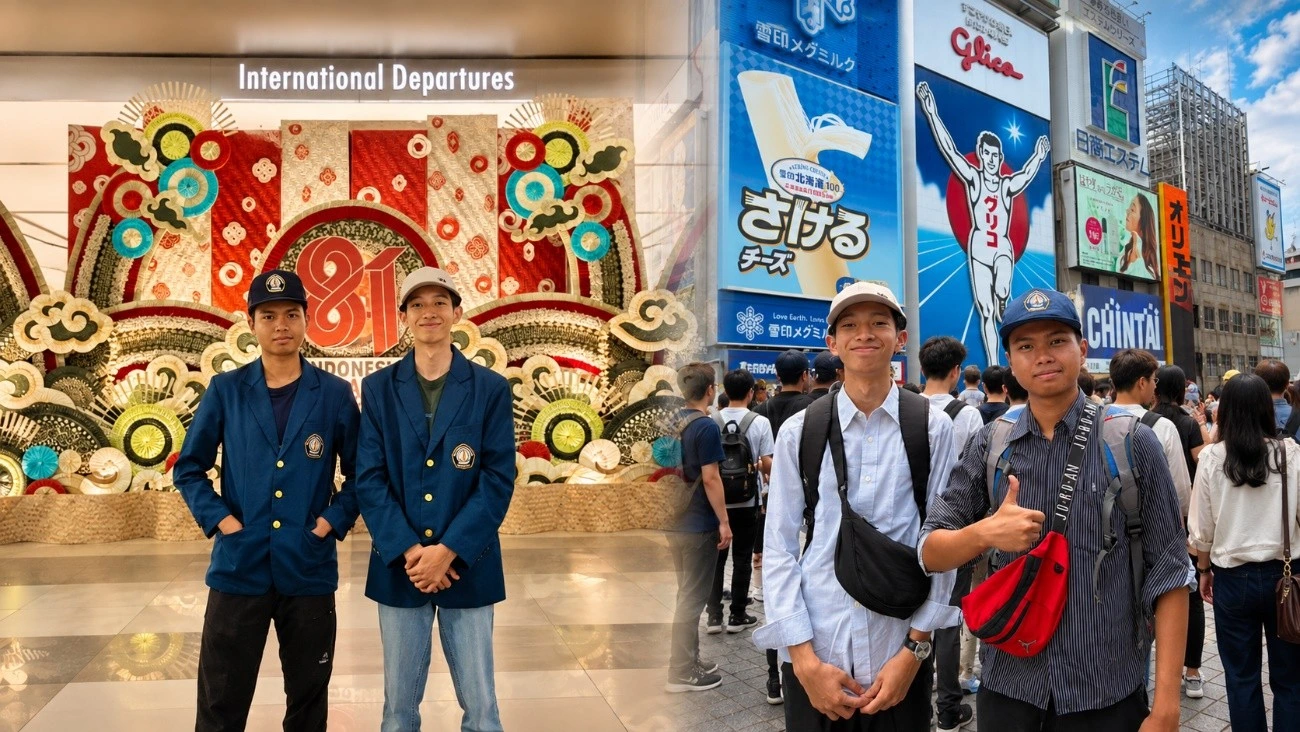
Osaka, Japan – Two students from the Industrial Chemical Engineering Technology Study Program (TRKI), Vocational School, Universitas Diponegoro, Aditya Wisnu Admaji and Devano Gothicardo, had the opportunity to participate in an international internship program at Tanaka Foods Co., Ltd., Japan. This program is part of strengthening vocational learning, which is not only oriented toward theory and laboratory practice but is also directly connected to the needs of global industry.
The international internship is an implementation of the collaboration between the Vocational School of Universitas Diponegoro and Tanaka Foods Co., Ltd. Through this program, students have the opportunity to learn directly in Japan’s food industry environment, understand product development processes, become familiar with international industrial work culture, and broaden their understanding of the professional standards applied in global companies.
For vocational students, this experience serves as an important momentum to connect academic competencies with real-world workplace practices. Aditya and Devano did not only learn about food production processes but were also trained to understand how a product is developed, tested, evaluated, and adjusted to market needs.
Strengthening Technical Skills in Japan’s Food Industry
During the internship program at Tanaka Foods Co., Ltd., the students were involved in various industrial learning activities, particularly in the bakery sector. One of the main focuses of the program was the utilization of flour paste as a filling ingredient in bread products.
In the initial stage, the students studied the characteristics of the ingredient, the function of flour paste in product formulation, and its application in the bakery industry. The learning process was then continued with testing the physical properties and performance of the ingredient to determine its effect on the quality of the final product.
In addition to gaining conceptual understanding, the students also conducted hands-on practice in applying flour paste to bread products. Through this activity, they gained experience in production processes, filling application techniques, the relationship between ingredient characteristics and product quality, and the stages of product development from formulation to readiness for production implementation.
This experience strengthened the students’ ability to apply classroom theory to real industrial situations. They were also trained to view production problems more analytically, understand quality standards, and develop problem-solving skills relevant to workplace needs.
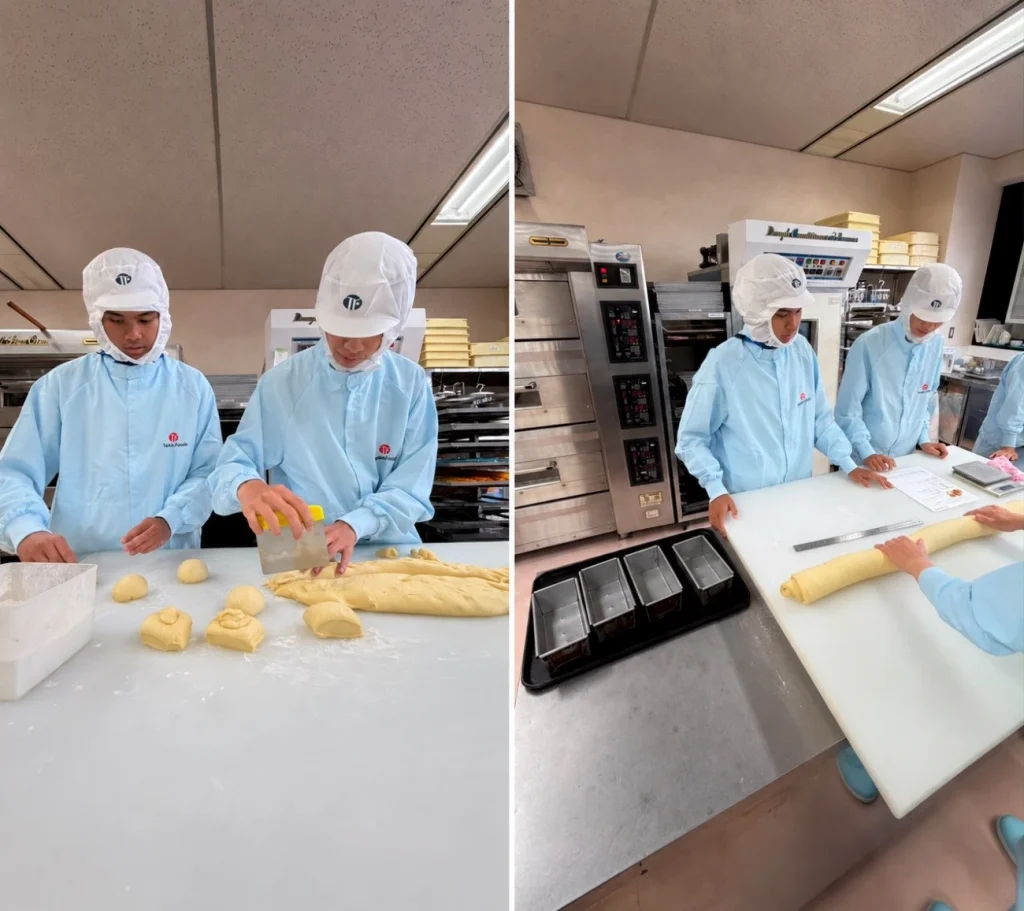
Students conducted hands-on practice in applying flour paste directly to bread products
Professional Competence and Adaptation to Global Work Culture
This international internship program did not only focus on strengthening technical skills. The students also gained important learning experiences related to professional competencies, such as discipline, responsibility, workplace communication, analytical ability, and adaptation to Japanese work culture.
Japanese industrial culture, known for precision, efficiency, discipline, and quality orientation, provided valuable experience for the students. Through direct involvement in the workplace, the students were able to understand that the competence of vocational graduates is not measured only by technical ability, but also by professional attitude, work ethic, adaptability, and readiness to meet international industrial standards.
This cross-cultural experience became an important part of the students’ international exposure. By interacting directly with industry mentors and the work environment in Japan, the students learned to understand the dynamics of professional communication, work patterns, and the mindset of global industry in developing food products.
Understanding Market Trends and Innovation in Japan’s Bakery Products
As part of enriching their industrial insight, Aditya and Devano also observed various bread products marketed in the Osaka area. The results of their observations were then presented to the industry mentors as part of the internship learning process.
This activity provided an understanding of trends in Japan’s bakery industry, product innovations emerging in the market, variations in the use of fillings, and consumer preferences for food products. Through this activity, the students were trained not only to understand products from the technical side of production but also from the perspective of market needs and consumer behavior.
The students’ presentation served as a medium to sharpen their professional communication skills, analytical preparation, and systematic delivery of ideas. These abilities are important for vocational graduates so that they can explain observations, provide data-based input, and contribute to product development in an industrial environment.
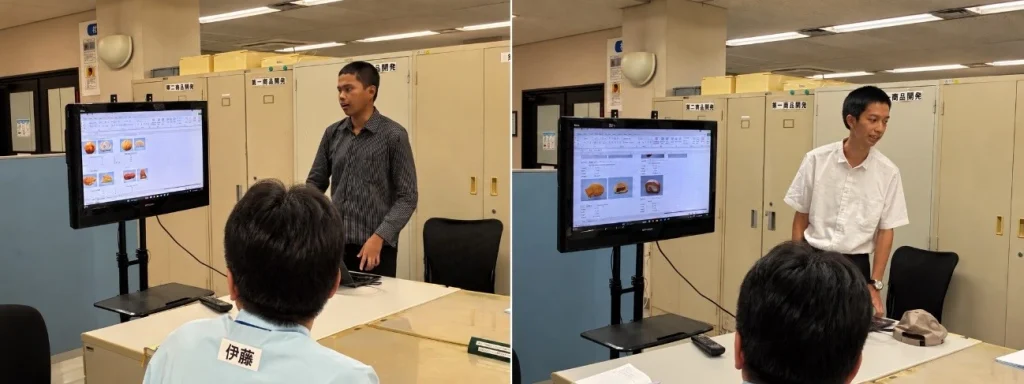
Students delivered a presentation on various bread products sold in the Osaka area
UNDIP Vocational School’s Strategy in Developing Internationally Competitive Graduates
The international internship program at Tanaka Foods Co., Ltd. demonstrates the commitment of UNDIP Vocational School to providing learning experiences that are relevant to the needs of global industry. Through international collaboration, students have the opportunity to learn beyond classrooms and laboratories while directly experiencing the work atmosphere of an overseas company.
The Dean of the Vocational School, Universitas Diponegoro, Prof. Dr. Ir. Budiyono, M.Si., stated that the international internship program is an important part of strengthening the competencies of vocational students. “The international internship program at Tanaka Foods Co., Ltd. serves as a global industrial learning space for students of Industrial Chemical Engineering Technology at UNDIP Vocational School to develop technical skills, professional competencies, adaptability to work culture, and international experience in Japan’s food sector,” said Budiyono. According to him, direct learning experiences in international industry need to be optimally utilized by students to broaden their perspectives, enhance competitiveness, and build readiness to face the challenges of the global workforce.
For the Industrial Chemical Engineering Technology Study Program, this activity is part of a strategy to produce graduates who are excellent, adaptive, innovative, and ready to compete at the international level. Strengthening technical skills, professional competencies, communication abilities, and cross-cultural understanding serves as an important foundation for students entering an increasingly competitive workforce.
The Head of the Industrial Chemical Engineering Technology Study Program, Vocational School, Universitas Diponegoro, Dr. Mohamad Endy Julianto, S.T., M.T., on a separate occasion emphasized that the international internship program is part of the study program’s strategy to produce graduates who are excellent, adaptive, and ready to compete globally. According to him, the formation of vocational character does not happen instantly but is built through a continuous learning process from the beginning of study until students enter the competency-strengthening stage in the final semester. In this context, international internship becomes one of the important experiences that strengthens students’ learning outcomes. “The series of vocational learning over six semesters needs to be directed not only toward building mastery of theory and technical skills, but also toward shaping work character, discipline, responsibility, adaptability, and readiness to meet global industrial standards. International internship programs such as the one at Tanaka Foods Co., Ltd. provide a real space for students to test and strengthen these competencies in an international industrial environment,” explained Endy. He added that the collaboration with Tanaka Foods provides a highly valuable opportunity for students to learn directly from international industry. “We want TRKI students to have strong technical competencies, understand global work culture, and be able to adapt to technological developments and industrial needs. This experience is expected to become an important foundation for their careers and contributions to the development of the food and process industries in the future,” he added.
Through this program, TRKI of UNDIP Vocational School continues to strengthen the role of vocational education as applied education that not only produces skilled graduates but also shapes professional character—graduates who are ready to work, ready to learn, and ready to contribute at both national and international levels.
The international internship experience at Tanaka Foods Co., Ltd. is evidence that vocational learning can be expanded through global industrial collaboration, providing students with opportunities to develop technical competencies, discipline, adaptability, professional communication, and cross-cultural insight.
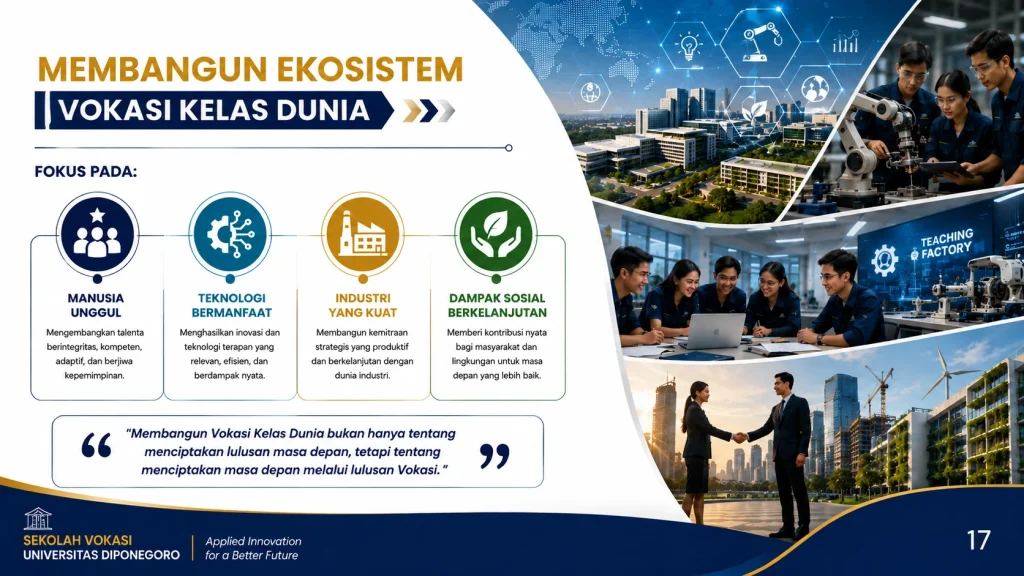
UNDIP Vocational School’s strategy in developing internationally competitive graduates
Through direct learning experience in Japan, Aditya Wisnu Admaji and Devano Gothicardo are expected to bring home new knowledge, skills, and perspectives that are beneficial for their personal development, the study program, and the vocational education ecosystem at UNDIP. This international internship program also serves as a concrete step in developing a generation of vocational graduates who are competent, confident, professionally grounded, and ready to contribute to the future development of the food industry.